FinQuest @NYU ECT

FinQuest @NYU ECT

FinQuest @NYU ECT

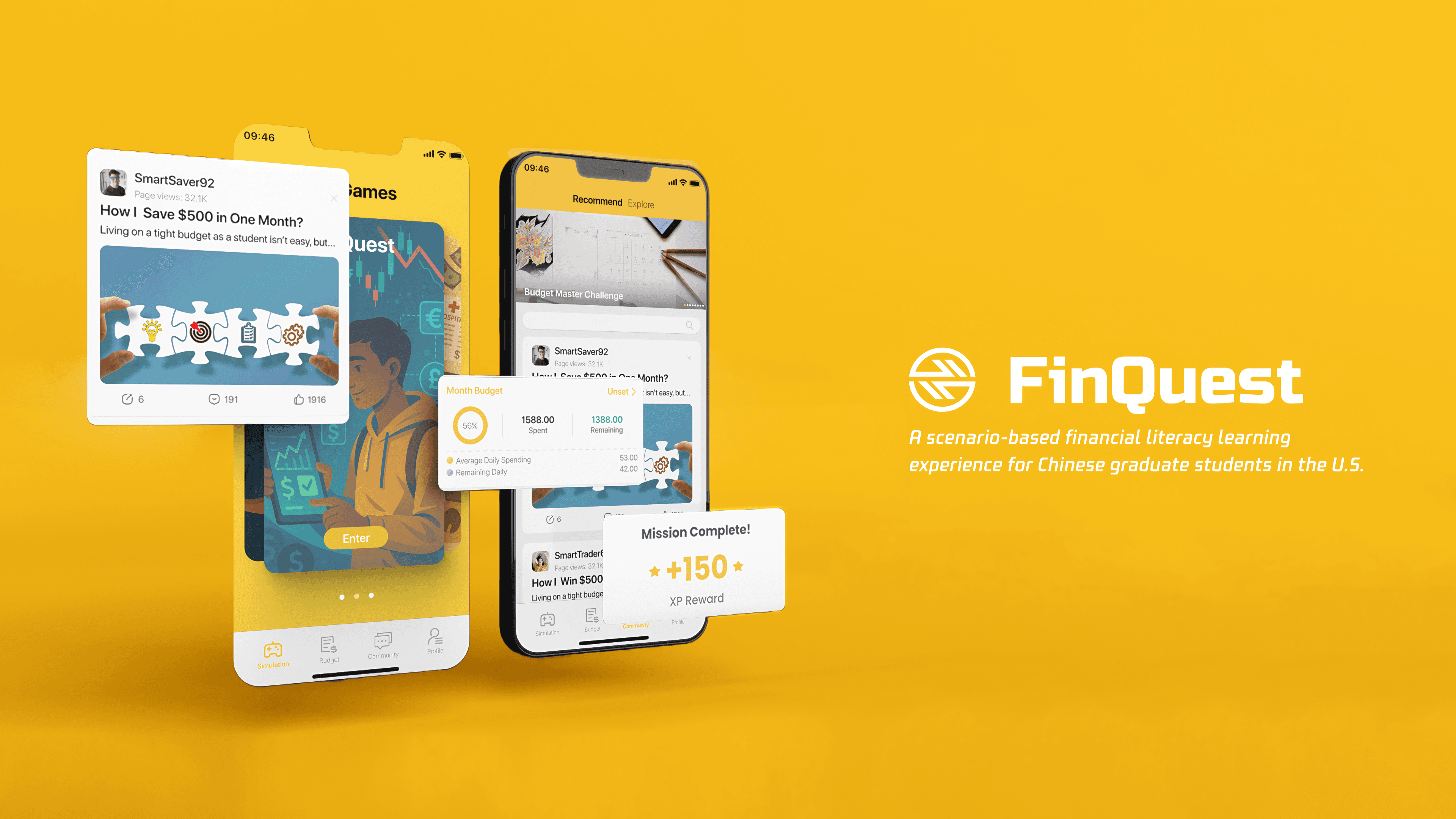
A scenario-based learning experience designed to help Chinese students build confidence in managing U.S. personal finance

A scenario-based learning experience designed to help Chinese students build confidence in managing U.S. personal finance

A scenario-based learning experience designed to help Chinese students build confidence in managing U.S. personal finance

Project Name

Project Name

Project Name

FinQuest @NYU ECT

Project Type

Project Type

Project Type

Team project

Team project

Team project

Team members

Team members

Sherin Chen, Sae Park

Cynthia Liang, Connie Ren

Sherin Chen, Sae Park

Cynthia Liang, Connie Ren

My role

My role

Team lead, Main UX/UI designer

Team lead, Main UX/UI designer

Project Type

Project Type

Project Type

Learning design

Learning design

Learning design

Duration

Duration

Duration

02.2025—05.2025

02.2025—05.2025

02.2025—05.2025

Abstract

Abstract

Abstract

In recent years, managing personal finance has become an essential yet challenging skill for international students living in the US. Unfamiliar financial systems, fragmented information sources, and high-stakes decisions around budgeting, banking, and transactions often create anxiety and prevent learners from effectively applying financial knowledge in real-life situations.

FinQuest is a scenario-based learning experience designed to help Chinese graduate students build confidence in managing U.S. personal finance. The solution is structured around two components: a Learning experience that uses simulated financial scenarios to support decision-making and reflection, and a Practicing layer that reinforces skills through budgeting tools, expense tracking, and repeated application.

Menu

Menu

Background Context

Background Context

Background Context

International students in the U.S. face frequent, high-stakes financial decisions—banking, budgeting, and currency exchange, while navigating unfamiliar systems and fragmented information. Even when they understand financial concepts, many struggle to apply them in real situations under uncertainty and stress. This project explores how a scenario-based learning experience can better support real-world financial decision-making through practice, not just information.

Need Analysis

Need Analysis

Need Analysis

Research Methods

Research Methods

Research Methods

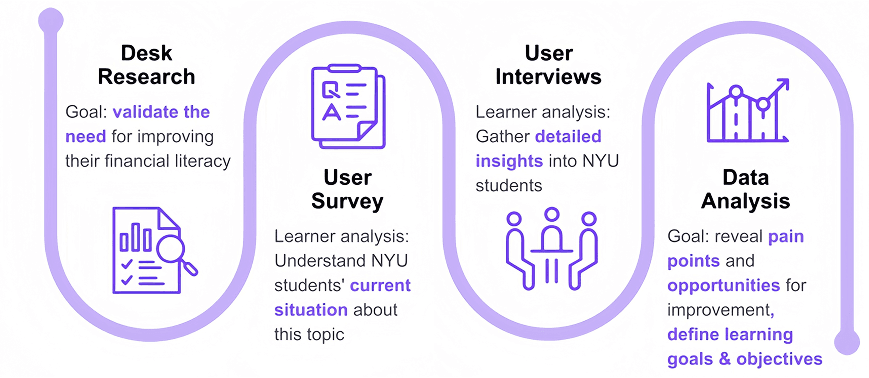
To identify the financial learning needs of international students—particularly Chinese students—we employed a mixed-method needs analysis approach.

Current Gaps

Current Gaps

Current Gaps

Knowledge gap

Knowledge gap

lack understanding of fundamental personal finance knowledge.

Skill gap

Skill gap

Unfamiliar with how to use banking systems and organize the budget effectively.

Unfamiliar with how to use banking systems and organize the budget effectively.

Motivation gap

Motivation gap

Do not prioritize improving their financial literacy and prefer to focus on academics.

Do not prioritize improving their financial literacy and prefer to focus on academics.

Resource gap

Resource gap

Lack access to tailored guidance, or support networks for personal finance

Lack access to tailored guidance, or support networks for personal finance

Existing Negative Impacts

Existing Negative Impacts

Existing Negative Impacts

Economic Stress and Financial Anxiety:

They often face financial challenges due to reduced family support amid economic uncertainties in China. This financial strain contributes to heightened stress and anxiety (Lin, 2024).

Economic Stress and Financial Anxiety:

They often face financial challenges due to reduced family support amid economic uncertainties in China. This financial strain contributes to heightened stress and anxiety (Lin, 2024).

Economic Stress and Financial Anxiety:

They often face financial challenges due to reduced family support amid economic uncertainties in China. This financial strain contributes to heightened stress and anxiety (Lin, 2024).

Academic Challenges:

Financial difficulties can force students to divide their attention between studies and part-time work, leading to compromised academic achievements. (MGHS, 2024)

Academic Challenges:

Financial difficulties can force students to divide their attention between studies and part-time work, leading to compromised academic achievements. (MGHS, 2024)

Academic Challenges:

Financial difficulties can force students to divide their attention between studies and part-time work, leading to compromised academic achievements. (MGHS, 2024)

Psychological Well-being:

Uncertainty about financial stability can lead to anxiety and depression among students, exacerbating feelings of isolation and homesickness. (Larbi et al., 2022)

Psychological Well-being:

Uncertainty about financial stability can lead to anxiety and depression among students, exacerbating feelings of isolation and homesickness. (Larbi et al., 2022)

Psychological Well-being:

Uncertainty about financial stability can lead to anxiety and depression among students, exacerbating feelings of isolation and homesickness. (Larbi et al., 2022)

Learner Analysis

Learner Analysis

Learner Analysis

Pain Points

Pain Points

Pain Points

Financial Stress Due to Rent and Tuition: 

The high cost of rent and tuition fees places a significant financial burden on learners, especially when combined with the cost of living in New York.

Understanding U.S. Financial Regulations:

The complexity of U.S. tax regulations and financial management systems is a major hurdle. International students often feel overwhelmed by the lack of clear, accessible resources to understand these topics.

International transfer Issues:

High fees and complicated procedures for transferring money from China to the U.S. are common frustrations.

Lack of Practical Guidance:

Many learners find the financial resources at NYU to be less helpful or are unaware of the more practical, relevant materials available to them.

Key Need

Key Need

Key Need

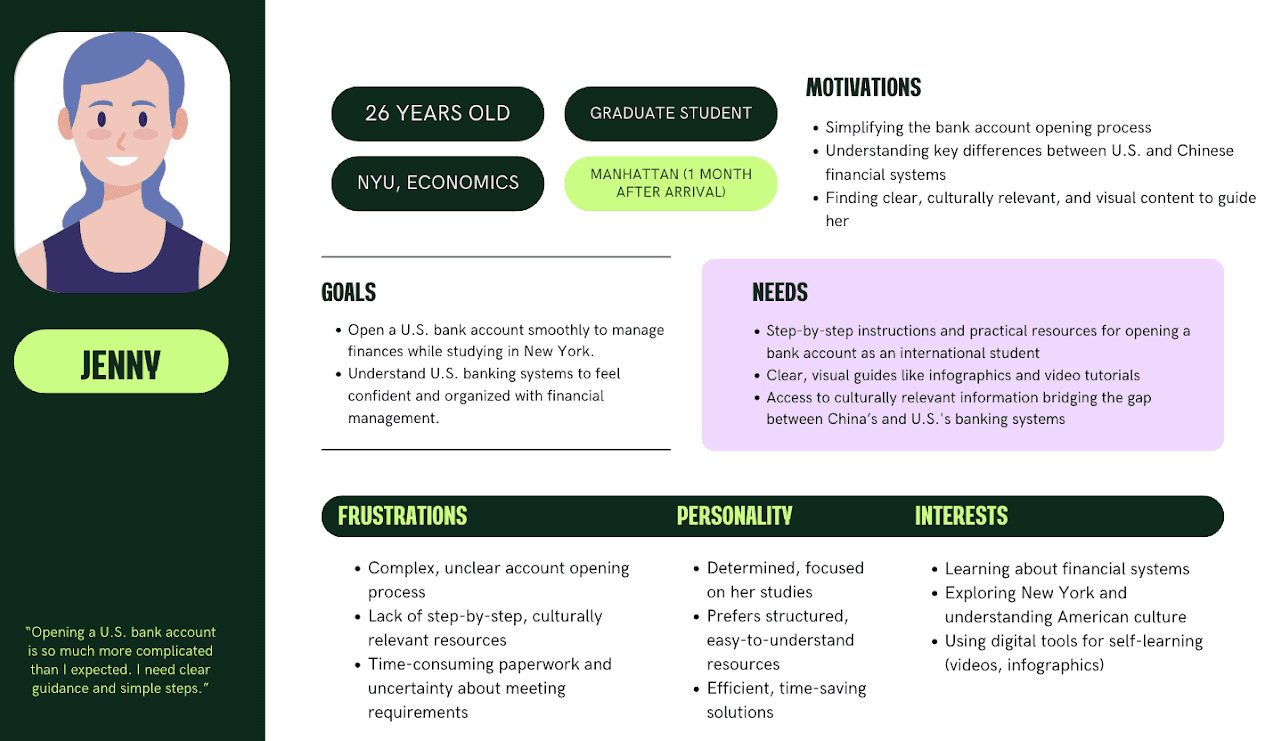
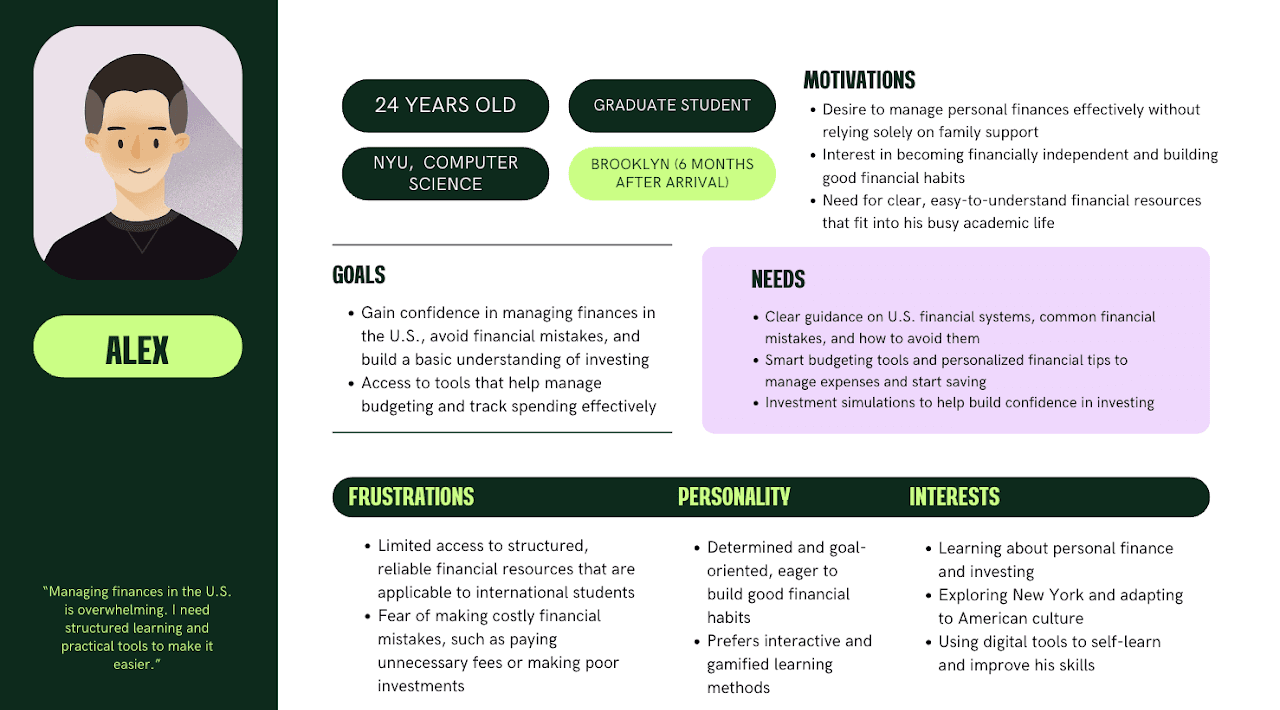
"Chinese graduate students need interactive, culturally relevant financial education that covers practical topics like U.S. bank accounts, international transfer fees, and exchange rate management, along with budgeting, basic investments, and credit management.”
Persona

Persona

Persona

Goals & Objectives

Goals & Objectives

Enterprise Requests
& Desk Research

Learning Outcome

Chinese international students in the U.S. will develop key financial literacy skills to confidently manage their personal finances, make informed financial decisions, and reduce financial stress through effective banking, money transferring, and budgeting.

Learning Goal 1: Understand and manage U.S. banking systems with confidence to support effective personal finance management.

Objective 1:

Identify key financial tools and banking systems by recognizing different types of U.S. bank accounts.

Evidence:

"When I first started working, I didn't know how to read the contract and signed it directly after skimming it."

Objective 2:

Understand how to open and manage an account reasonably.

Evidence:

"I was afraid to question my superiors' requests for fear of affecting my professional future. I am not brave enough to do that"

Learning Goal 2: Make international money transfer decisions by evaluating various platforms and analyzing exchange rates.

Objective 1:

Compare different money transfer methods by evaluating their fees, speed, and security to determine the most cost-effective option.

Objective 1:

Compare different money transfer methods by evaluating their fees, speed, and security to determine the most cost-effective option.

Objective 1:

Compare different money transfer methods by evaluating their fees, speed, and security to determine the most cost-effective option.

Objective 2:

Analyze exchange rate fluctuations and their impact on personal finances to develop strategies for minimizing financial losses.

Learning Goal 3: Build long-term financial discipline by applying effective budgeting strategies and monitoring financial habits.

Objective 1:

Understand effective budgeting strategies, such as the 50/30/20 rule and zero-based budgeting.

Objective 1:

Understand effective budgeting strategies, such as the 50/30/20 rule and zero-based budgeting.

Objective 1:

Understand effective budgeting strategies, such as the 50/30/20 rule and zero-based budgeting.

Objective 2:

Apply budgeting knowledge by using appropriate budgeting tools to track income and expenses.

Objective 3:

Analyze financial behaviors and adjust budget plans regularly to build sustainable financial habits.

Final Design

Solution Overview

Our design solution includes two core components: learning and practicing

Learning:

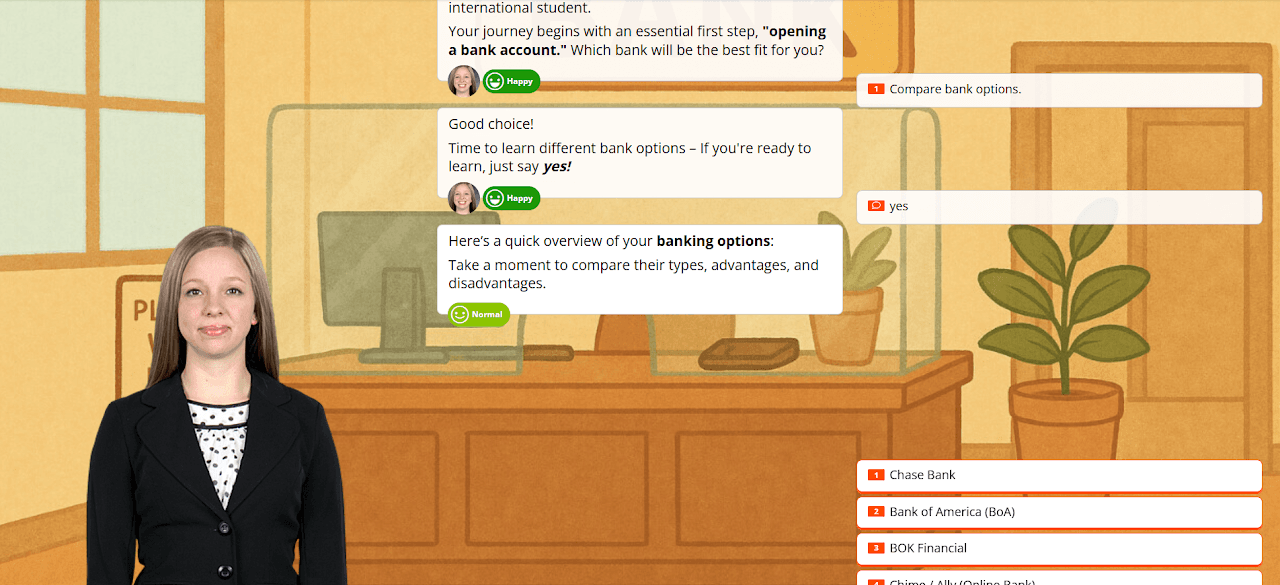
The learning component features a simulation game (Game-Based Learning) that helps Chinese international students at NYU understand key financial concepts and boosts their motivation. 


Practicing:

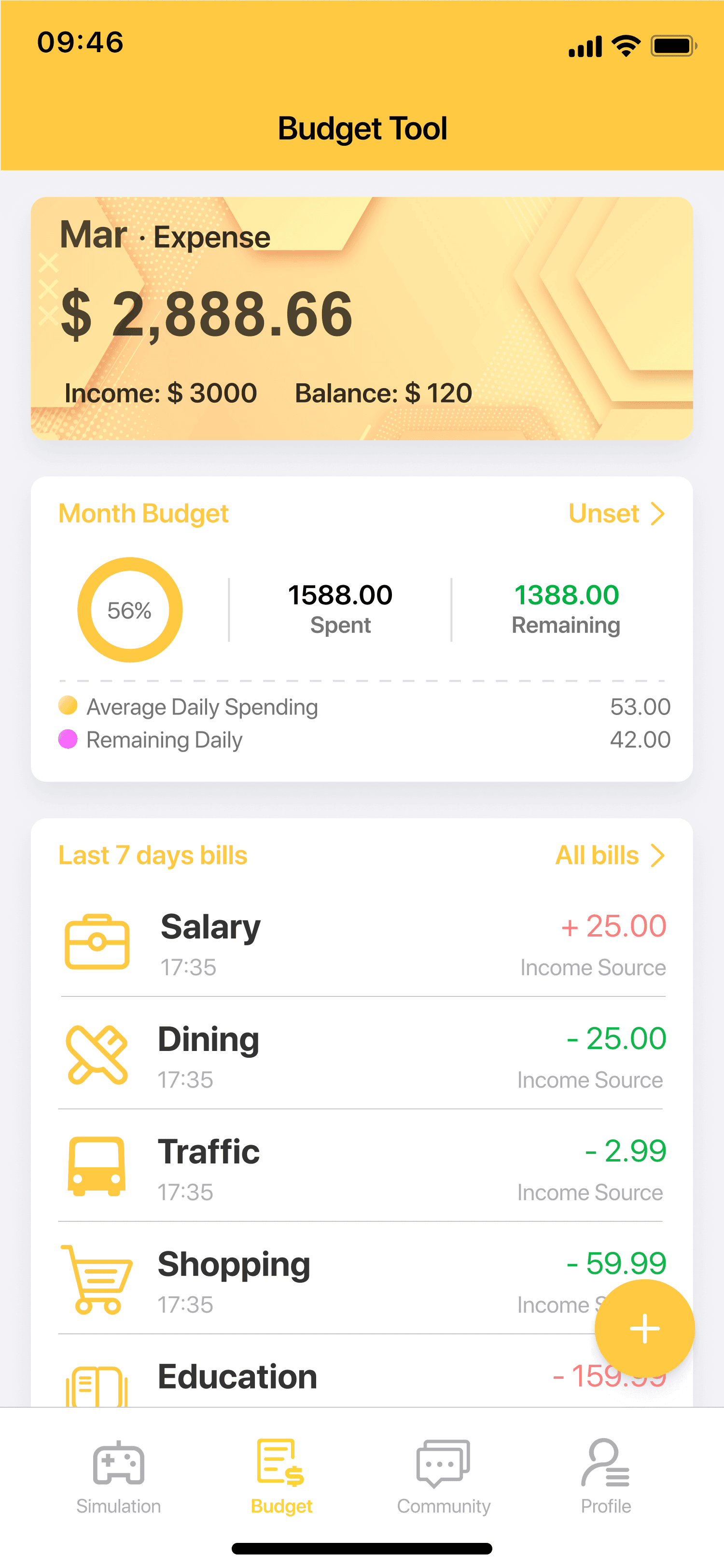
The practicing component provides budgeting tools (Experiential Learning) and a peer discussion community (Connected Learning) where students can apply what they’ve learned to real-life financial decisions and habits. 


Part 1 - Learning (Simulation Game)

Part 1 - Learning (Simulation Game)

Overview

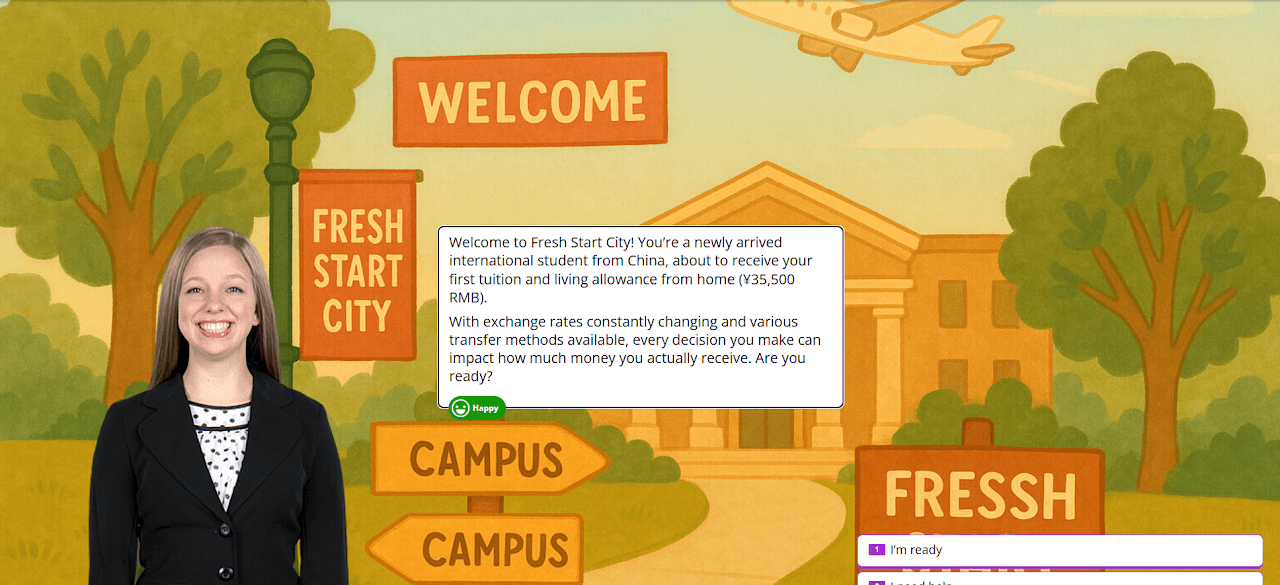
Financial Frontier is an immersive, gamified learning experience designed to support Chinese students in developing core financial literacy skills. The entire experience takes place in a fictional digital world where learners navigate real-life financial situations through three interconnected game modules

Duration: 30 mins (can be repeated for practice)

Duration: 30 mins

Learning materials: simulation

Modality: Mobile Simulation Game

Facilitation: Progression Assistance

Part 2 - Practicing

Part 2 - Practicing

Core Incentive Mechanism

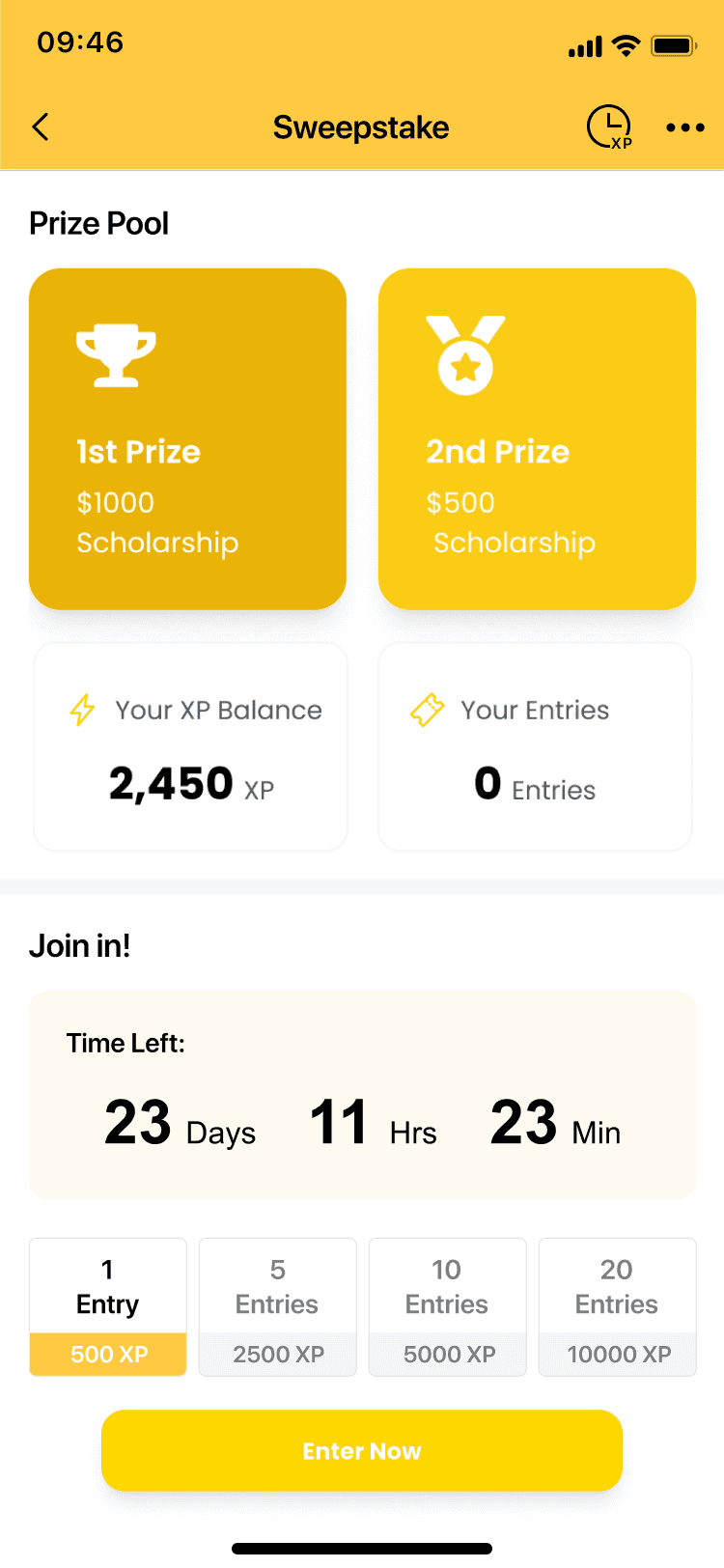
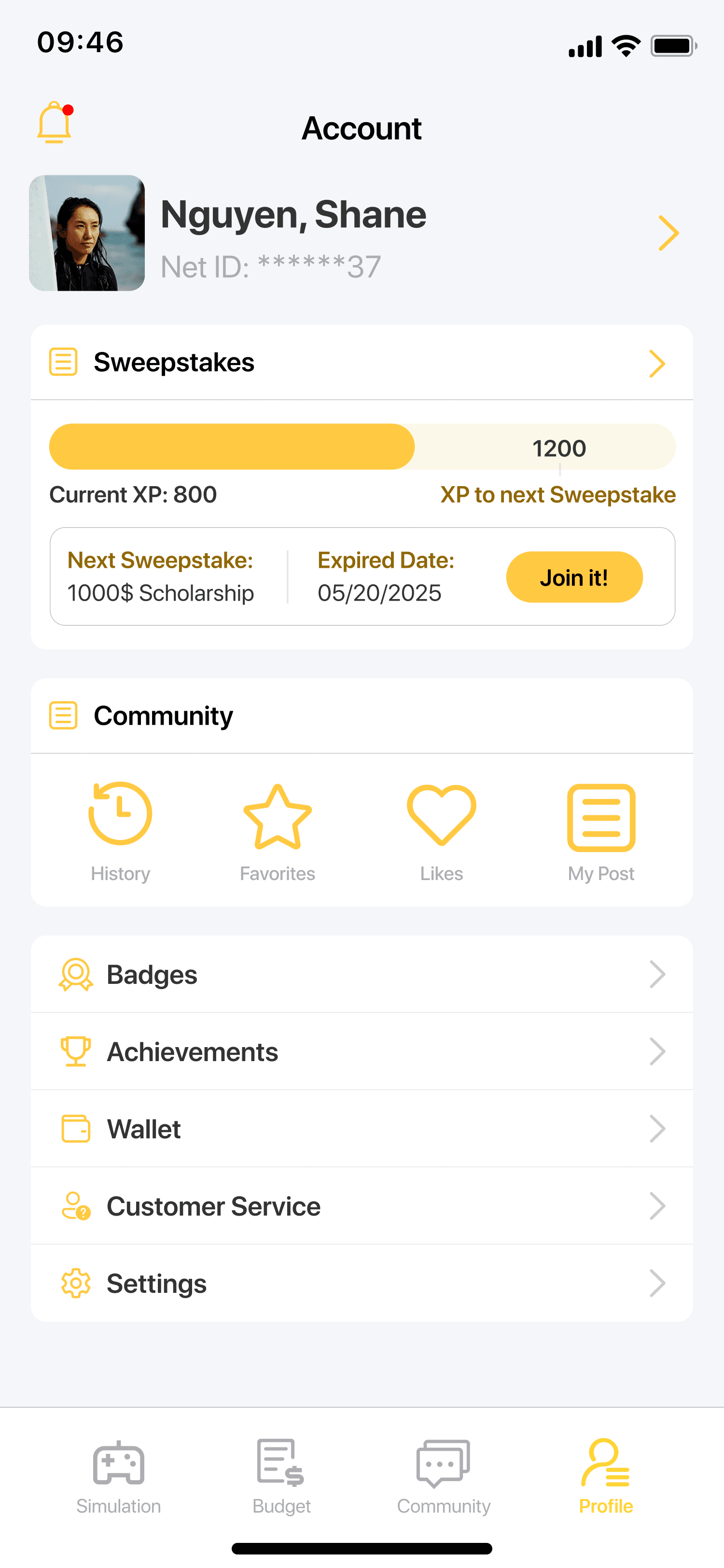
The users can complete interactive tasks (e.g., participating in simulation games, posting, budget challenges) for scholarship sweepstake entries.
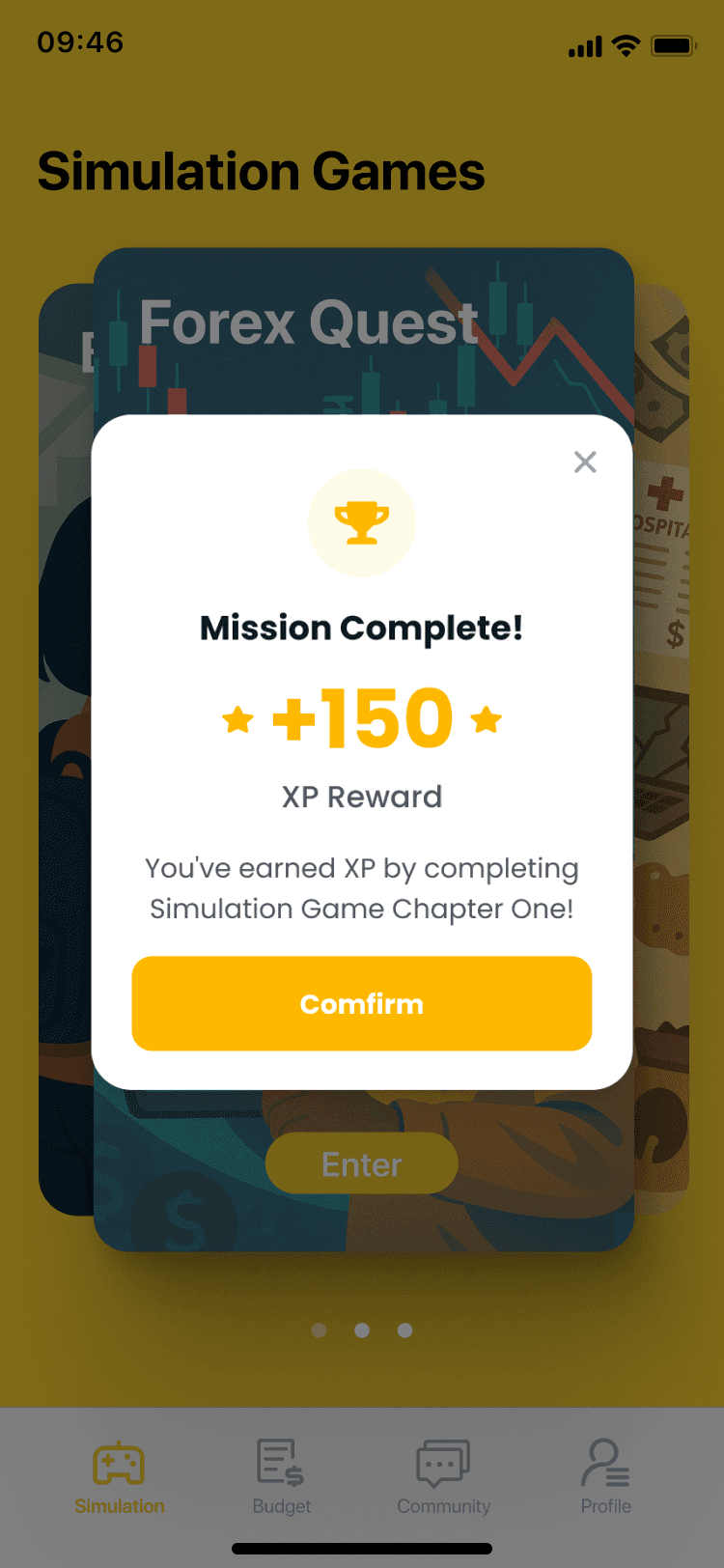
Users earn XP by completing interactive tasks in the app

Users earn XP by completing interactive tasks in the app

Users can view and join the sweepstakes on the Profile

Users can view and join the sweepstakes on the Profile

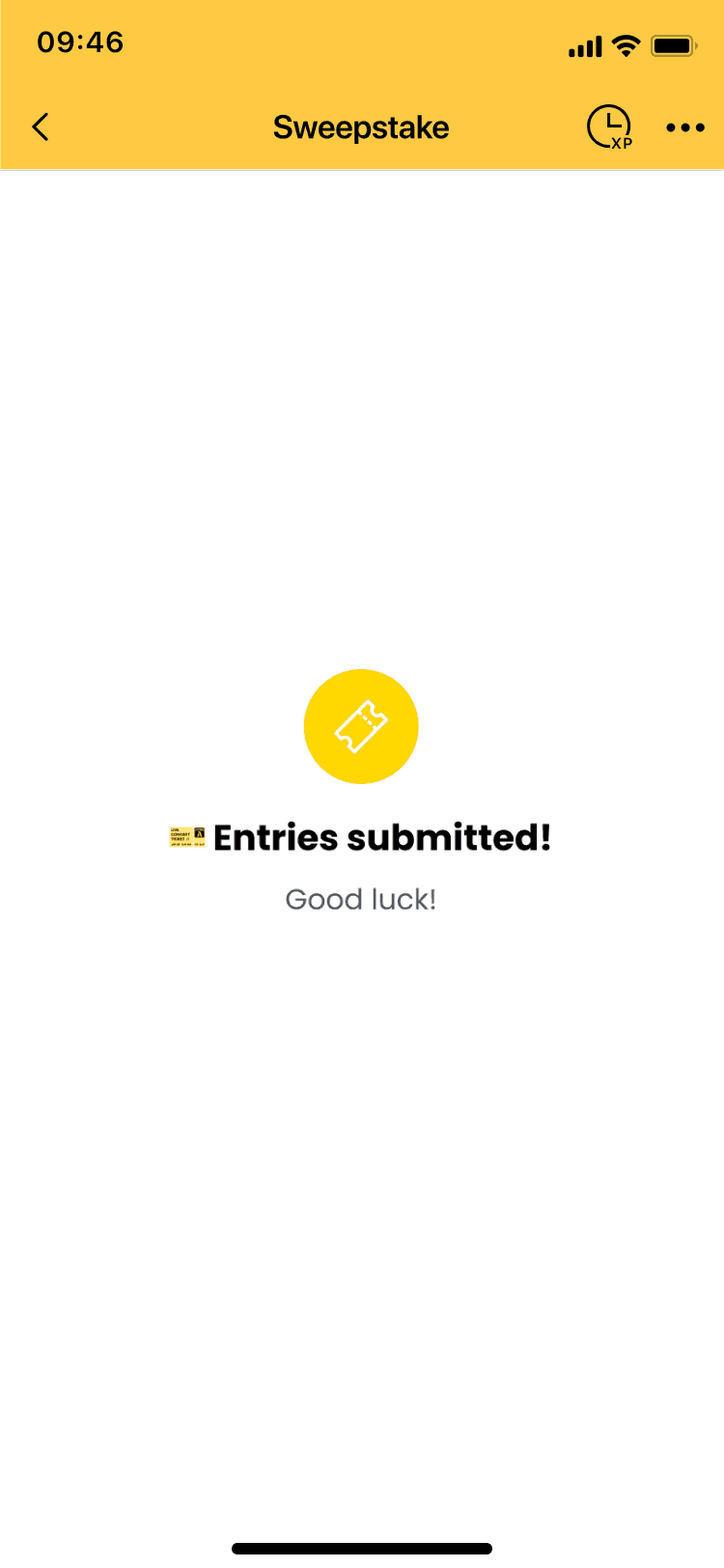
XP can be exchanged for entries to the sweepstakes

XP can be exchanged for entries to the sweepstakes

Once exchanged, users have a chance to win scholarships provided by the NYU

Once exchanged, users have a chance to win scholarships provided by the NYU

Interaction Tasks

Interaction Tasks

Simulation Games

Simulation Games

A simulation game that helps students understand key financial concepts and raises their motivation

A simulation game that helps students understand key financial concepts and raises their motivation

Making Budgeting Plan

Making Budgeting Plan

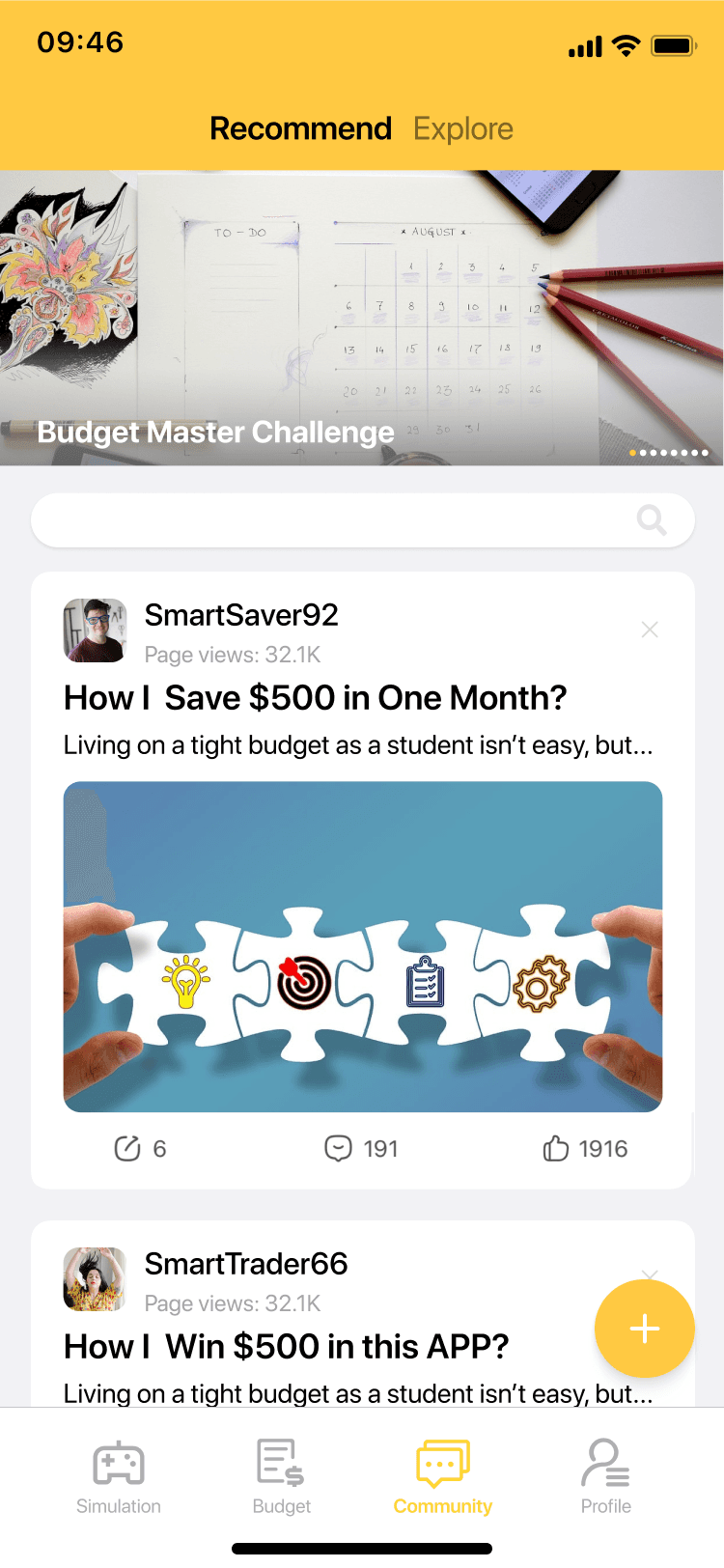
Use the Budgeting Tool to track income and expenses, set and revise monthly budgets, and submit reflections

Use the Budgeting Tool to track income and expenses, set and revise monthly budgets, and submit reflections

Joining in Community

Joining in Community

Engage in the Community by sharing transfer experiences, budgeting strategies, and financial tips

Engage in the Community by sharing transfer experiences, budgeting strategies, and financial tips

Try this prototype!

If you’d like to experience this prototype, imagine you are an international graduate student living in the U.S. and managing your personal finances for the first time. Try completing the following tasks:

Task 1

Enter the Simulation Games section and complete a scenario-based financial challenge (e.g., bank visits or currency exchange scenarios) to understand key financial concepts and decision-making outcomes.

Task 2

Use the Budget Tool to record your income and expenses, set a monthly budget plan, and review your spending breakdown. Submit your budget and reflect on how your financial decisions affect your balance.

Task 3

Explore the Community section to read shared budgeting strategies and financial experiences from other users. You may post your own insights or participate in interactive challenges to earn additional rewards.

Task 4

Complete interactive tasks to earn XP, then visit the Sweepstakes section to exchange XP for entries. The more tasks you complete, the higher your chances of winning scholarship rewards.

Final Presentation Video

Final Presentation Video

Logic Model & Design Rationale

Logic Model & Design Rationale

Enterprise Requests
& Desk Research

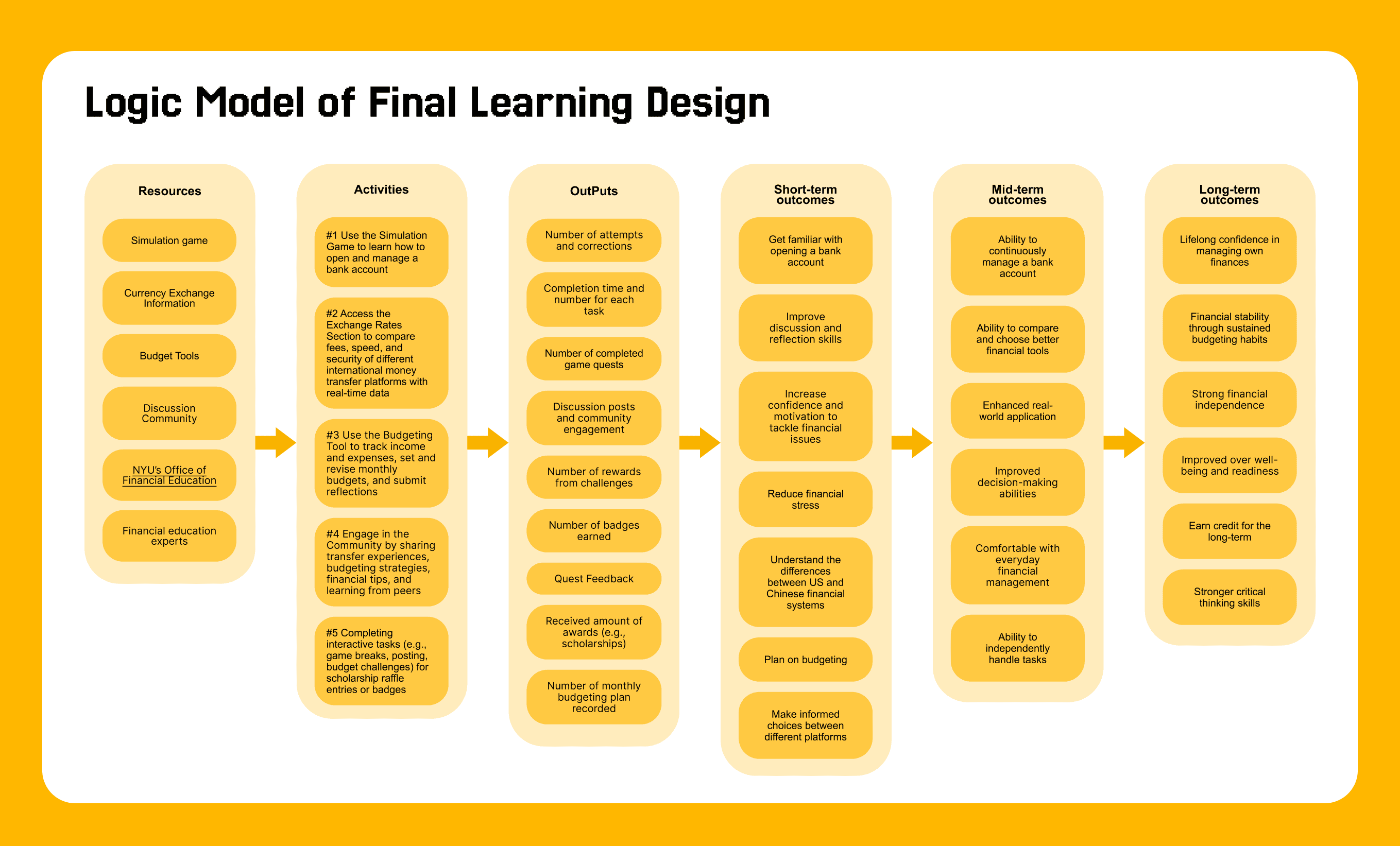
Logic Model

Logic Model

Logic Model

Design Rationale

Design Rationale

Design Rationale

Game - Based Elements

Game - Based Elements

Game - Based Elements

Community Feature

Community Feature

Community Feature

Budgeting Tool Activity

Budgeting Tool Activity

Budgeting Tool Activity

Get in touch

Get in touch

Get in touch

Feel free to reach out if you're interested in collaboration or have recruitment opportunities. I'd be happy to connect!

Feel free to reach out if you're interested in collaboration or have recruitment opportunities. I'd be happy to connect!

Feel free to reach out if you're interested in collaboration or have recruitment opportunities. I'd be happy to connect!

Email: xuanlinchen86@gmail.com

Email: xuanlinchen86@gmail.com

Email: xuanlinchen86@gmail.com

More Information:

More Information:

More Information:

© 2025 Sherin Chen

© 2025 Sherin Chen

© 2025 Sherin Chen